
Full Grain vs Top Grain vs Genuine vs Bonded Leather: What’s Actually in Your Wallet
Walk into any store selling leather goods and you’ll see the same word stamped on half the tags: “genuine leather.” It sounds like the top tier. It isn’t.
“Genuine leather” is actually one of the lowest grades on the market — and most people never find out until their wallet is peeling at the corners eighteen months in. So let’s clear it up properly. Here’s what full grain, top grain, genuine, and bonded leather actually mean, how to tell them apart, and why the grade you choose determines whether your wallet ages into something better or just falls apart.
It starts with the hide, split into layers
Leather comes from a hide, and a hide isn’t uniform all the way through. The layer closest to the surface is dense, tightly packed, and naturally durable. As you go deeper, the fibers loosen up. Manufacturers split hides into layers to get more material out of each one — and which layer you’re holding determines which grade you’ve got.
Full grain: the top layer, left alone
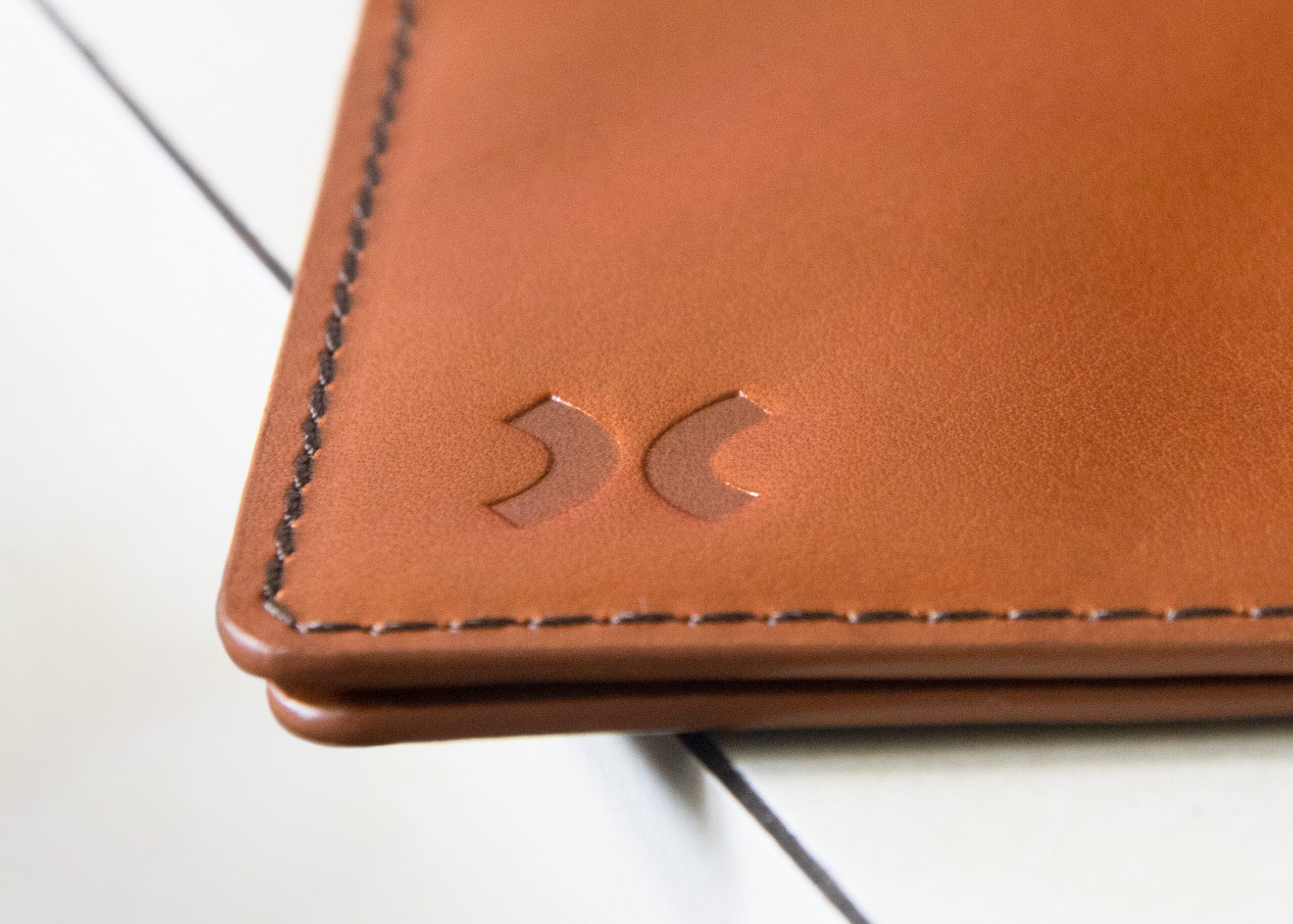
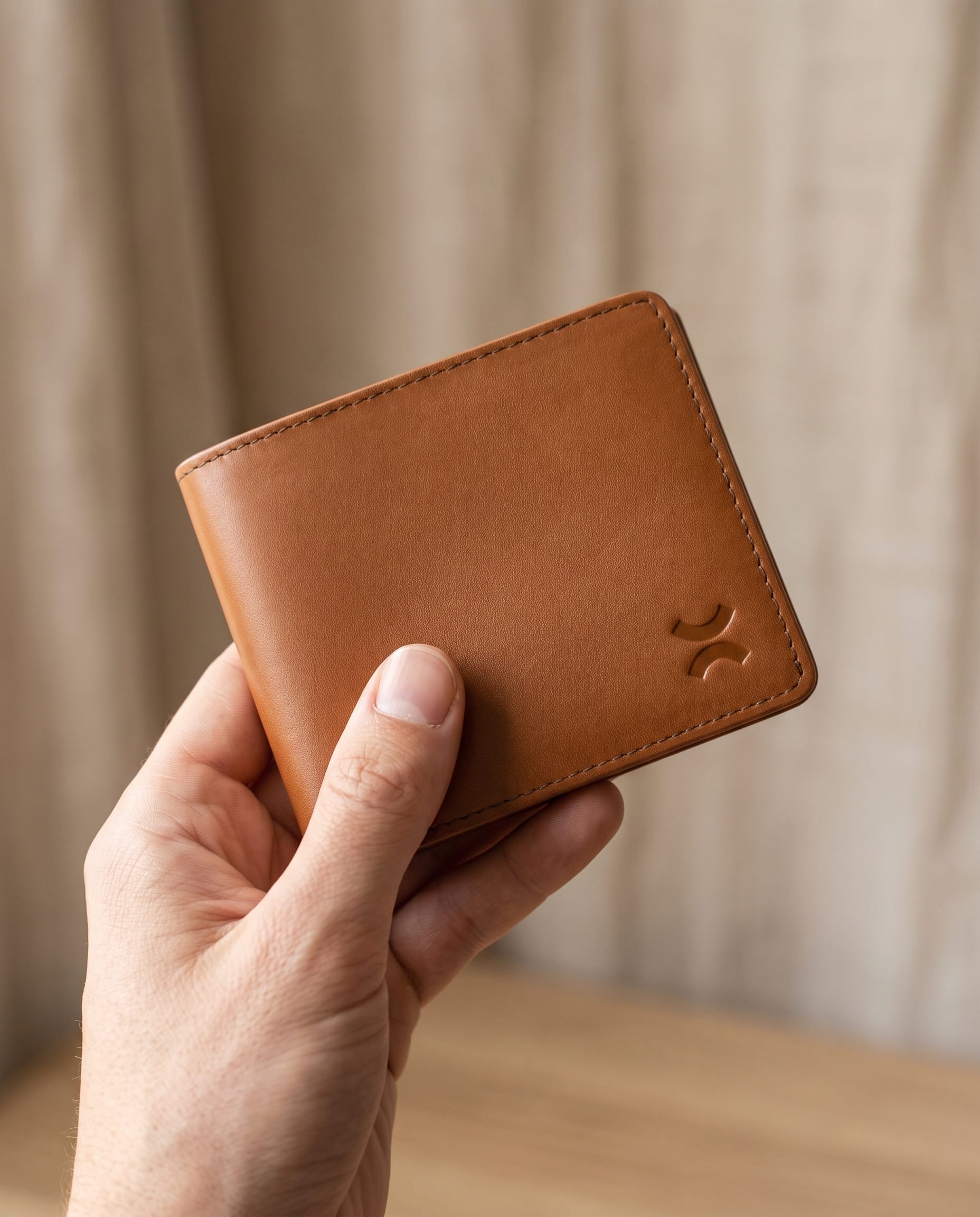
Full grain is the outermost layer of the hide, used exactly as it comes — no sanding, no buffing, no correcting. That means the natural grain, the texture, even small variations in the surface, all stay intact. This is also the strongest, densest layer, so full grain leather resists wear in a way lower grades simply can’t.
The trade-off? It’s not flawless. Full grain shows subtle natural marks, and it doesn’t look “uniform” the way a printed or corrected surface does. That’s the point. Over months of use, full grain builds a patina — a gradual richness and depth in the color and texture that only develops through actual, regular use. No two pieces age quite the same way, and that’s what makes it worth choosing.
Every EXTORA wallet — Sleekfold, Flapfold, Subslim, Cardware — is built from full grain leather. Not because it’s the easiest grade to work with (it isn’t) but because it’s the only one that gets better the longer you carry it.
Top grain: sanded for consistency
Top grain is still a genuinely good material — it’s the second layer down, or the top layer lightly sanded to even out imperfections. That sanding removes some of the surface’s natural texture and a thin layer of the toughest fibers, which is why top grain is slightly less durable than full grain and won’t develop quite the same depth of patina. It’s smoother, more uniform, and often a bit more affordable — a fair middle ground, just not the top of the range.
Genuine leather: the name is doing a lot of work
Here’s the mismatch: “genuine leather” sounds premium, but it’s actually a lower grade — split from deeper, looser layers of the hide, then usually stamped or coated to fake a grain pattern. It’s real material, technically, but it lacks the density and strength of full or top grain, and it wears out faster. Cracking, peeling, and thinning are common within a year or two of regular use. If a tag says “genuine leather” and nothing more specific, that’s the whole story — the vaguer the label, the lower the grade tends to be.
Bonded leather: leftover scraps, held together
Bonded leather sits at the bottom. It’s made from scrap fibers and offcuts, shredded, bonded with adhesive, and pressed onto a fabric backing with a printed surface layered on top to imitate a grain pattern. It’s the cheapest to produce, and it shows: bonded leather flakes, peels, and breaks down fast, especially anywhere it flexes — which, in a wallet, is constantly.
Why the grade matters more than the price tag
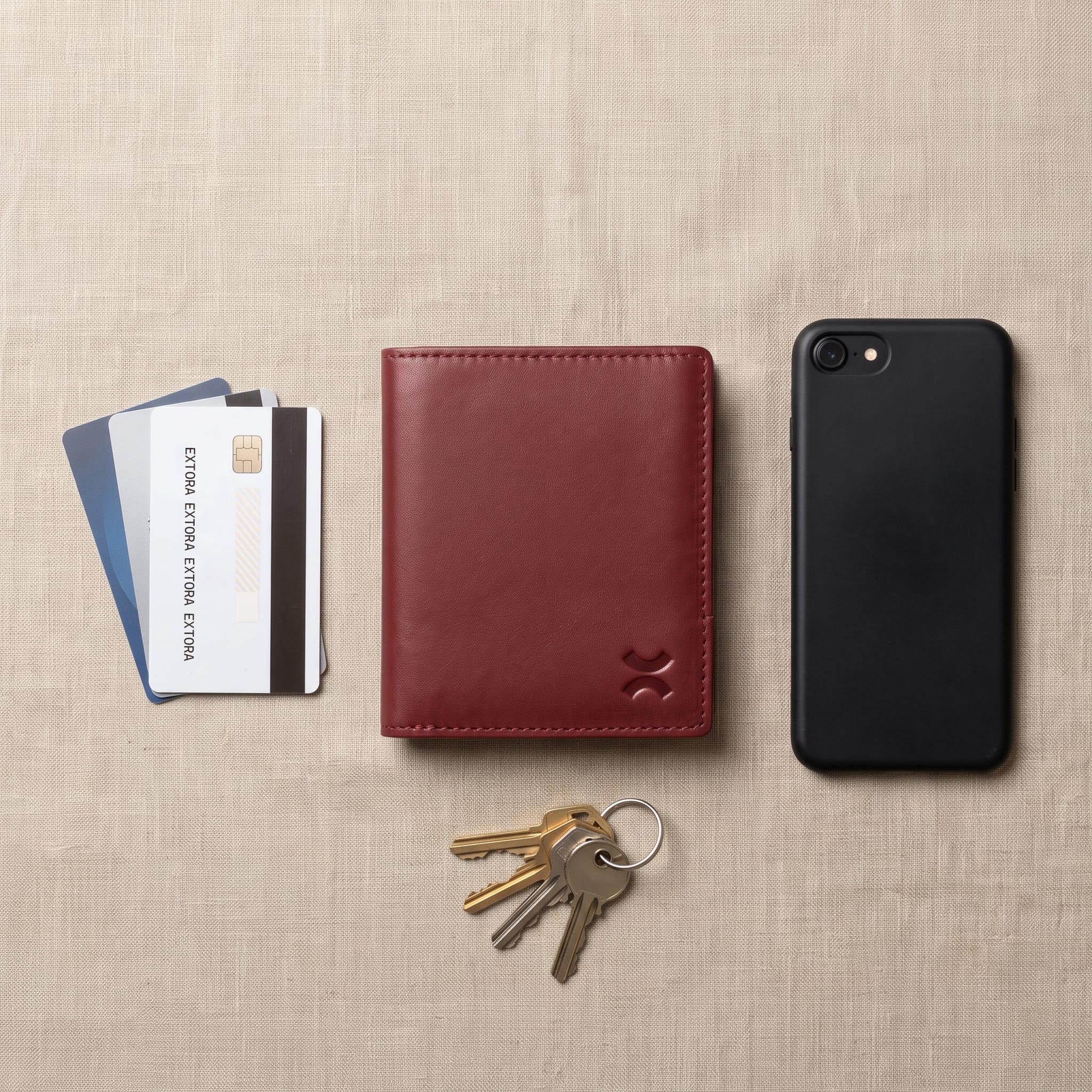
A wallet lives in your pocket, opens and closes daily, and takes more flexing and friction than almost anything else you own. Lower grades weren’t built to survive that. Full grain was.
That’s the whole logic behind Carry Less. Carry Better. — fewer things in your pocket, but the ones that are there are built to last and to look better for it. A full grain wallet doesn’t need replacing every year. It develops character instead of falling apart, which — over time — actually costs you less than repeatedly replacing a lower grade.
The quick way to check
Before you buy any leather good, ask one direct question: what grade of leather is this? “Leather” or “genuine leather” alone isn’t an answer — it’s a dodge. A brand confident in its material will say “full grain” or “top grain” specifically, because there’s nothing to hide.
Every EXTORA wallet is full grain, start to finish — no correcting, no shortcuts, just the strongest layer of the hide, built to age with you.
Explore the collection → extora.co